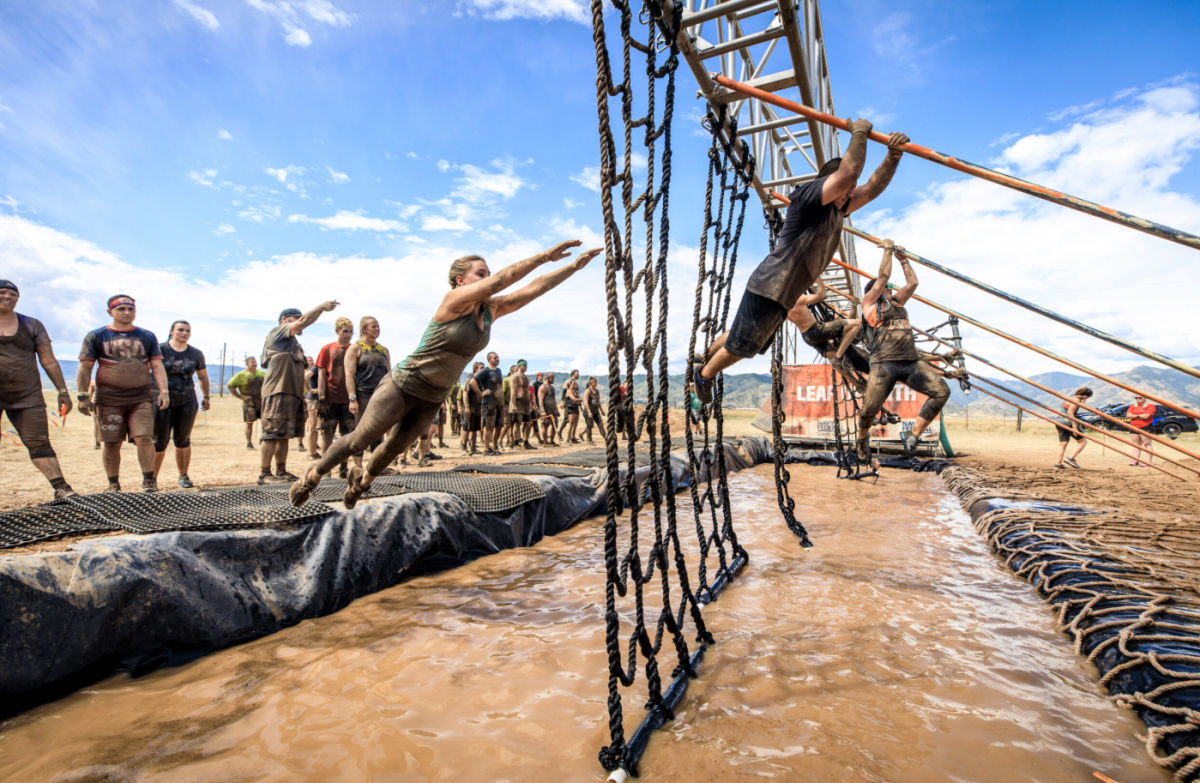
Tough Mudder combines running with physical obstacles that test endurance, strength and teamwork. Unlike a conventional road race, participants tackle muddy trails, high walls, water crossings and climbing challenges, often helping one another through the more difficult sections.
Events range from the beginner-friendly Tough Mudder 5K to competitive endurance challenges lasting up to 24 hours. Each venue has its own terrain and obstacle layout, so choosing the right distance and preparing for the conditions can make the experience safer and more enjoyable.
What Is Tough Mudder?
Tough Mudder is a series of outdoor obstacle course events held at venues with natural terrain and purpose-built challenges. Courses combine running or walking with climbing, crawling, balancing and negotiating muddy or uneven ground.
Teamwork is central to the experience. Some obstacles are difficult to complete alone, and participants are encouraged to help one another, whether they registered together or met on the course. Unlike conventional running races, standard Tough Mudder events are untimed, with completing the course taking priority over speed.
You don’t need previous obstacle course racing experience to participate. However, basic cardiovascular fitness, leg strength and the ability to pull or support your body weight will make the obstacles easier to handle. Competitive endurance formats demand considerably more preparation and follow separate rules.
Tough Mudder Race Formats and Distances
Tough Mudder offers several distances and endurance formats, although availability depends on the event calendar and location. Choosing the right Tough Mudder distance comes down to your fitness level, experience and appetite for a physical challenge.
The standard 5K and 15K focus on completing obstacles, while Infinity and World’s Toughest Mudder challenge competitors to cover as much distance as possible within a set time limit.
| Format | Distance or duration | Main characteristics |
| Tough Mudder 5K | Approximately 5 km (3.1 miles) | Shorter untimed challenge with 12+ obstacles |
| Tough Mudder 15K | Approximately 15 km (9.3 miles) | Longer course with 20+ obstacles and greater endurance demands |
| Tough Mudder Infinity | 8-hour endurance event | Competitive format involving multiple laps and accumulated distance |
| World’s Toughest Mudder | 24-hour endurance event | Long-distance competition with repeated laps, obstacles and overnight racing |
The Tough Mudder 5K is a good introduction to obstacle course racing. Although the running distance is relatively short, participants still face muddy sections, climbing challenges and obstacles requiring upper-body strength. A Tough Mudder race can feel considerably harder than a road run of the same distance, particularly when slippery terrain and repeated obstacles interrupt your pace.
The 15K calls for more endurance and better pacing. Hanging, pulling and climbing become increasingly demanding as fatigue builds, so participants should be comfortable spending several hours on their feet and moving over uneven ground.
Infinity isn’t simply an extended version of the standard 15K. It’s a separate competitive format in which participants complete repeated laps over eight hours, managing their pace, nutrition and recovery between obstacles. World’s Toughest Mudder takes the endurance challenge further with 24 hours of racing, including overnight conditions and changing temperatures.
Advertised distances are approximate. Actual course lengths depend on the venue, terrain and obstacle placement, so check the event details before registering.
Main Types of Tough Mudder Obstacles
Tough Mudder obstacles challenge different physical abilities. Some demand upper-body strength or balance, while others test confidence in cold water, confined spaces or unfamiliar situations. The selection changes between events, and not every signature obstacle appears at every venue.
Walls and Climbing Obstacles
High walls require a combination of leg drive, pulling strength and coordination. Berlin Walls, a well-known Tough Mudder obstacle, involves climbing over a vertical barrier. Participants often give one another a boost or help from above, making teamwork particularly valuable.
Good technique matters as much as raw strength. Using your legs to push upwards can reduce the effort required from your arms, while a secure grip helps when moving over the top of a wall.
Mud and Crawling Sections
Low-clearance obstacles require crawling beneath ropes, netting or other barriers, sometimes through thick mud. Moving too quickly can waste energy, especially when the ground offers little traction.
Keeping your body low and moving steadily makes these sections easier to negotiate. Muddy terrain also demands careful footing between obstacles, particularly on slopes where a small slip can interrupt your progress.
Water-Based Challenges
Water obstacles may involve wading, brief immersion or navigating specially designed structures in cold or muddy water. Arctic Enema is among the best-known examples, traditionally requiring participants to enter icy water.
Sudden cold exposure can affect breathing and coordination. Follow the obstacle crew’s instructions, avoid rushing into the water and don’t attempt cold-immersion challenges if you have a medical condition that makes them unsafe.
Grip and Hanging Obstacles
Funky Monkey and similar challenges typically require participants to traverse a series of suspended grips or bars without touching the ground. Grip endurance, shoulder stability and controlled body movement are important, especially when hands are wet or muddy.
These obstacles can catch experienced runners off guard. Strong cardiovascular fitness doesn’t necessarily translate into the ability to hang from a bar or support your body weight for an extended period.
Teamwork and Special Obstacles
Some challenges are designed around cooperation, with participants helping others climb, maintain balance or cross difficult sections. Others test confidence rather than conventional athletic ability.
Electroshock Therapy, featured at some Tough Mudder events, involves hanging wires that can deliver electric shocks. Participants should review the event’s safety guidance, consider relevant medical restrictions and use permitted bypass routes when necessary.
Obstacle designs and availability change between venues and seasons. A course map or video from a previous event won’t necessarily reflect the challenges at an upcoming Tough Mudder.
How to Train for Tough Mudder
Good Tough Mudder preparation involves more than simply increasing your weekly running mileage. You’ll need enough endurance to cover the course, along with the strength, grip and stability to tackle obstacles when you’re already tired.
Eight to twelve weeks of structured training is a reasonable starting period for many beginners, although the ideal duration depends on current fitness and the chosen event. Someone who regularly runs trails may need more upper-body work, while an experienced gym-goer might benefit from additional aerobic training.
A balanced week could include three running sessions, two strength workouts and at least one recovery day. Occasional circuits combining running with bodyweight exercises help prepare the body for repeated changes in effort.
Running and Endurance
Most Tough Mudder courses involve substantial running or walking between obstacles. Training on hills, trails and uneven surfaces is therefore more useful than relying entirely on flat roads.
For the 5K, gradually working towards a comfortable five- to seven-kilometre run provides a useful endurance base. Participants preparing for the 15K can aim for longer trail sessions, potentially reaching 12–15 kilometres before the event if their fitness and training history allow. These are training targets rather than mandatory distances.
Useful sessions include:
- Easy runs: Maintain a conversational pace to develop aerobic endurance without excessive fatigue.
- Hill repeats: Build leg strength and improve your ability to handle steep climbs.
- Trail runs: Practise maintaining balance and choosing secure footing on gravel, grass and slopes.
- Run-and-exercise intervals: Run 800 metres, complete a short circuit of squats or lunges, then return to running.
Run-and-exercise intervals are particularly useful for learning to settle back into your running pace after physically demanding obstacles.
Strength and Grip Training
Pulling strength helps with walls, ropes and hanging obstacles, while strong legs make muddy climbs and uneven descents easier. Core stability supports balance and body control throughout the course.
A practical Tough Mudder training programme can include:
| Exercise | Main benefit | Suggested starting volume |
| Assisted pull-ups or pull-ups | Climbing and pulling strength | 3 sets of 5–10 reps |
| Dead hangs | Grip endurance | 3 sets of 15–30 seconds |
| Squats | Leg strength and stability | 3 sets of 10–15 reps |
| Walking lunges | Single-leg control | 3 sets of 10 reps per leg |
| Farmer’s carries | Grip and core strength | 3 × 20–40 m carries |
| Planks | Core stability | 3 holds of 30–60 seconds |
You don’t need to master unassisted pull-ups before entering Tough Mudder. Assisted variations, resistance-band exercises and controlled hanging drills can help develop the pulling strength needed for climbing obstacles.
Adjust repetitions and duration to your current ability. Beginners should focus on technique and gradual progression rather than trying to meet every suggested target immediately.
Dead hangs and farmer’s carries are especially useful for grip endurance. There’s no need to make training equipment deliberately slippery, as doing so increases injury risk without providing much additional benefit.
During the final week, reduce workout intensity and avoid unfamiliar exercises that could leave you sore. Arriving well-rested is more useful than completing one last exhausting session.
What to Wear and Expect on Race Day
Expect to get wet, muddy and possibly cold, even when the weather is relatively mild. Clothing should allow unrestricted movement, dry quickly and stay secure while climbing or crawling.
Lightweight synthetic tops, shorts or leggings are generally preferable to cotton, which absorbs water and becomes heavy. Close-fitting clothing is less likely to catch on obstacles.
Trail running shoes with reliable grip are a sensible choice for muddy slopes and wet grass. They should fit securely, as deep mud can pull loose shoes off your feet. Avoid wearing a brand-new pair on event day.
Whether to wear gloves comes down to personal preference. Some participants appreciate the hand protection, while others find that gloves reduce their grip on wet bars or ropes. Thick or poorly fitting gloves can be particularly troublesome.
Check the event’s equipment rules before packing. Restrictions on footwear, gloves, hydration packs and other personal items may vary by format and venue, especially at competitive endurance events.
Before travelling, review the organiser’s instructions, weather forecast and arrival requirements. A typical event-day routine involves:
- Arriving early enough for parking, check-in and any required registration procedures.
- Attending the safety briefing and following instructions from event staff.
- Starting at the assigned time and staying on the marked course.
- Taking breaks and using hydration stations when necessary.
- Collecting any finisher rewards and changing into dry clothes afterwards.
Pack a towel, clean clothes, spare socks and a waterproof bag for muddy equipment. Sunscreen may also be useful on exposed courses.
Hydration requirements depend on temperature, individual sweat rates and time spent on the course. Drink according to your needs rather than forcing excessive amounts of water. For longer events, plan carbohydrate intake and consider electrolytes, particularly in hot weather.
Standard 5K and 15K events generally allow participants to bypass obstacles they cannot safely attempt. Competitive endurance events may require penalty tasks or impose other consequences for failed or skipped challenges.
Anyone who becomes injured, feels unwell or encounters an unsafe situation should stop and notify event staff.
FAQ
How long does a Tough Mudder take?
The organiser gives approximate average completion times of 2–2.5 hours for the 5K and 3.5–4 hours for the 15K. Actual times vary with fitness, terrain, obstacle queues and breaks. Standard events are untimed, so participants can take the course at their own pace.
Is Tough Mudder suitable for beginners?
Yes. The 5K is designed to be accessible to first-time participants, although basic running fitness and some strength training are recommended. You don’t need to master every obstacle beforehand, but being comfortable with short runs, bodyweight exercises and uneven terrain will help.
How many obstacles are in a Tough Mudder event?
The 5K typically features at least 12 obstacles, while the 15K includes 20 or more. The selection depends on the venue, and certain signature challenges may appear only on longer courses.
Can you complete Tough Mudder without a team?
Yes. You can register individually for standard Tough Mudder events. Other participants frequently offer assistance at obstacles, so arriving with a team isn’t necessary.
What is the minimum age for Tough Mudder?
Under published US rules, the minimum age is 14 for the 5K and 16 for the 15K, with parental permission and an adult chaperone required for under-18s. Infinity and World’s Toughest Mudder generally require participants to be at least 18. Check the rules for your chosen country and event before registering.
What happens if you cannot complete an obstacle?
Standard events generally permit participants to bypass obstacles without competitive penalties. Endurance competitions may apply penalty exercises or other rules, so check the requirements for your chosen format and follow the instructions at each station.
How difficult is Tough Mudder 15K compared with 5K?
The main difference is the ability to sustain physical effort over several hours. Preparing for the 15K means building longer trail runs into your routine, practising pacing and developing enough strength to handle obstacles after your muscles have started to fatigue.
Is Tough Mudder a timed race?
The standard 5K and 15K are untimed challenges. Infinity and World’s Toughest Mudder are competitive endurance events lasting eight and 24 hours, respectively, with performance measured through completed laps and distance under the applicable event rules.